Sign in


Short answer. Pack fragile items so they cannot move and cannot touch the walls of the box. Use a sturdy box with room for cushioning, wrap each item on its own, fill every gap, and double box anything that breaks easily. UPS and FedEx both recommend the two-box method for fragile goods, and USPS suggests closing and shaking the box: if it rattles, add more padding. A "Fragile" sticker helps, but it does not replace good packing.
Why packing matters more than the label
Parcels travel through sorting machines, conveyor belts and trucks. They get stacked, tipped and dropped a short distance many times along the way. Carriers do not promise to handle a box marked "Fragile" differently from the others.
FedEx says it cannot ensure compliance with markings like "Up" arrows or "This End Up". USPS suggests marking a package "Fragile", but adds that careful packaging is the best way to protect valuable items. So write "Fragile" if you like, then pack as if nobody will read it.
Good packing also matters when something goes wrong. Carriers expect items to be packed to their guidelines, and a damage claim for a poorly packed item is harder to win. Our guide on shipping insurance explains how coverage and claims work.
Step 1: Choose a strong box
All three carriers start with the box.
- USPS says to pick a box strong enough to protect the contents and large enough for cushioning. It advises against reusing mailing boxes, because they can weaken in the shipping process.
- UPS asks for a rigid box with flaps attached, and says not to exceed the box's maximum weight, which is printed on the bottom flap.
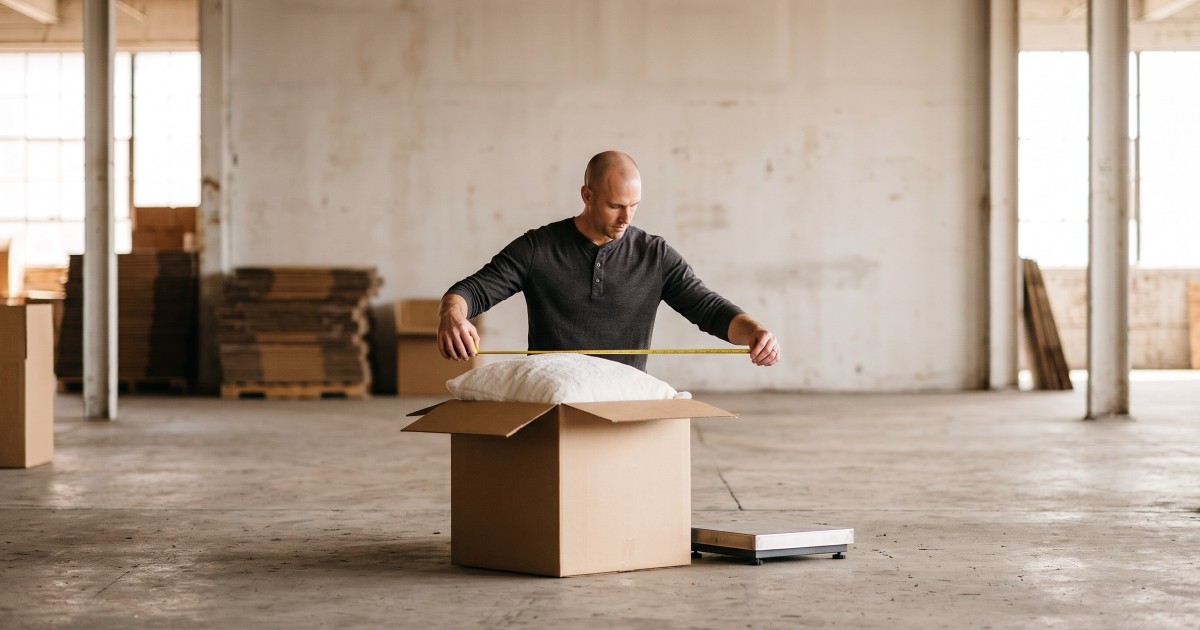
- FedEx says the box should be sturdy enough for the item's weight and large enough to hold cushioning. Its packing FAQ says a box should allow 2 to 3 inches of cushioning on all six sides.
A box that is too small presses the item against the walls. A box that is far too big lets it slide and needs a lot of filler. It can also cost more, because carriers may bill by the size of the box. See our guide on dimensional weight.
Step 2: Wrap each item on its own
Never let two fragile items touch. Wrap them one by one.
- Bubble wrap. UPS recommends several layers, especially on corners and edges, with the flat side of the wrap facing the product.
- Thickness. For breakables, FedEx recommends wrapping each item individually in at least 3 inches of air cellular cushioning, then filling empty spaces with loose fill.
- Hollow items. USPS suggests packing glass and fragile hollow items, like vases, with newspaper or packing material, and placing cushioning inside hollow items as well.
Step 3: Fill every gap
Once the item is wrapped, it should sit in the middle of the box with cushioning on all sides. FedEx recommends placing the product in the center with ample cushioning around it, using crumpled paper, peanuts or other filler to stop movement.
UPS gives specific advice on materials:
- Packing peanuts. Use no less than 2 inches of loose fill around lightweight items. UPS notes that peanuts are not ideal for flat, narrow products that can move in transit.
- Air pillows. Good as void fill for lightweight items without sharp corners or edges. UPS warns that very hot or cold temperatures can reduce their protection.
- Crumpled kraft paper. UPS lists it for lightweight, non fragile items, tightly crumpled, with at least 2 inches between the contents and the box. For fragile goods, combine it with proper wrapping.
- Corrugated inserts. Can be added to make the box stronger.
Step 4: Double box breakables
For glass, ceramics and other items that break easily, both UPS and FedEx recommend two boxes.
UPS describes it this way:
- Pack the wrapped item in the first box and fill empty spaces to limit movement.
- Choose an outer box that is 6 inches larger than the inner box in length, width and depth.
- Put 3 inches of cushioning around the inner box, on every side.
- Fill any remaining space, then tape all closures and seams.
FedEx gives the same core rule: double box fragile items inside a larger box with 3 inches of cushioning in and around the inner box. The outer box takes the bumps, the cushioning absorbs them, and the inner box keeps the item in place.
Step 5: Do the shake test
USPS gives a simple check: close the box and shake it. If it rattles, add padding to keep items from shifting. You should not hear or feel anything move. If you do, open it and fill the gaps before you seal it for good.
Step 6: Seal and label correctly
- USPS says to reinforce all seams with 2 inch wide tape, using packaging tape, reinforced tape or paper tape, and to put at least one strip on the bottom.
- UPS says to use only shipping tape, not masking tape, cellophane tape, duct tape or string.
- FedEx recommends the "H" taping method: one strip down the middle seam and one across each edge.
Put the shipping label on the largest flat surface and keep it off seams and edges, as FedEx advises. UPS and USPS both suggest placing a second label with the delivery and return addresses inside the box, in case the outside label is damaged. Cover or remove old labels and barcodes if you reuse a box.
Tips for common fragile items
These are general practices. Always follow the carrier's own rules for your item.
- Glass and ceramics. Wrap each piece separately, fill hollow parts, and double box. Plates and flat pieces travel better standing on edge than stacked flat.
- Electronics. UPS warns that foam peanuts create static electricity that can damage electronics. Use anti static foam and bubble sheeting instead. Keep the original box and inserts if you still have them.
- Framed art and mirrors. Protect the glass face and the corners, which take most of the impact. Use a box only slightly larger than the frame, with cushioning on all sides, so the frame cannot bend or slide.
- Several small items. Wrap each one, separate them with dividers or cushioning, and make sure none touches the box walls.
Choose signature and coverage
Packing protects the item. Coverage protects your money if packing is not enough.
- Coverage. Check how much coverage your service includes and whether the item's value needs more. The details are in our shipping insurance guide.
- Signature. For valuable items, FedEx suggests requiring a signature so the package is not left at the door. This helps with loss and theft, not with breakage, but valuable fragile items often need both.
Document before you ship
If an item arrives broken, you will need to show how it was packed. Before you seal the box:
- Take photos of the item, showing it was undamaged.
- Photograph each layer: the wrapped item, the inner box, the cushioning and the sealed outer box.
- Keep the receipt or invoice that shows the item's value.
- Keep the tracking number and the label receipt.
Tell your buyer to keep the box and all packing materials if something arrives damaged. Carriers may ask to see them during a claim.
Shipping fragile items in LogiRates
LogiRates lets you compare USPS, UPS and FedEx rates for your parcel within the United States, pay, and print the label. Enter the size and weight of the packed box, after double boxing, so the rate matches what you ship.
Additional services, such as signature and extra insurance, are shown with their own price before you pay. Most services include $100 of coverage, and the exact amount is shown when you create the shipment. The final price is shown before you pay. You can drop the parcel off at a carrier location, or book a courier pickup when the service offers one.